Maverick spend, the buying that happens outside agreed suppliers, prices and approval routes, has always been a quiet drain on margins. What has changed is how much attention it now gets. With budgets under pressure, more purchasing happening remotely and finance teams expected to explain every pound, organisations are taking a fresh look at how much of their spend actually follows policy. In this post we look at why maverick spend is back on the agenda, why it is so hard to stamp out with rules alone, and how the i2B purchase-to-pay solution makes the compliant route the easiest one to take.
What is maverick spend?
Maverick spend (sometimes called rogue or off-contract spend) is any purchase made outside the process an organisation has agreed. Typical examples include:
- Ordering from a supplier that is not on the approved list when an approved one is available
- Paying a higher price than the rate agreed with a supplier
- Placing an order before it has been approved, then raising the paperwork afterwards
- Splitting a large purchase into smaller ones to stay under an approval threshold
- Buying on a card or by email, so the spend never appears in the purchasing system
Very little of this is deliberate. Most of the time people are simply trying to get what they need quickly, and the official process feels slower than picking up the phone.
Why maverick spend is back on the agenda
Across the purchase-to-pay market, a few broad trends are pushing spend control up the priority list.
Tighter budgets. When budgets are squeezed, finance leaders want to know that money is being spent where it was planned. Off-policy purchases make forecasting harder and erode the savings that procurement negotiated.
Distributed buying. Requesters now sit across more sites, departments and working patterns. A process that relies on everyone remembering the rules, or on paper forms reaching the right desk, struggles to keep up.
Better data expectations. Organisations increasingly expect complete, reliable spend data to support decisions and audits. Purchases that bypass the system leave gaps that no report can fill.
Automation raising the bar. As more of the cycle becomes automated, from approvals to invoice matching, the purchases that still happen outside the system stand out, and become the main source of exceptions and delays.
The common thread is that control has to be built into the way people buy, not added afterwards.
Why rules on their own do not stop maverick spend
Most organisations already have a purchasing policy. The problem is that a policy document cannot stop someone ordering from the wrong supplier at the wrong price. If raising a requisition takes longer than going direct, people will go direct.
That is why the most effective approach to maverick spend is to make the compliant route faster and simpler than the workaround. When the right suppliers, the right prices and the right approvers are all built into the system, following policy stops being a chore.
How i2B helps you reduce maverick spend
i2B is designed so that buying on policy is the natural outcome of using the system. Here is how its e-procurement and purchase-to-pay features work together.
Catalogues and price lists at agreed rates
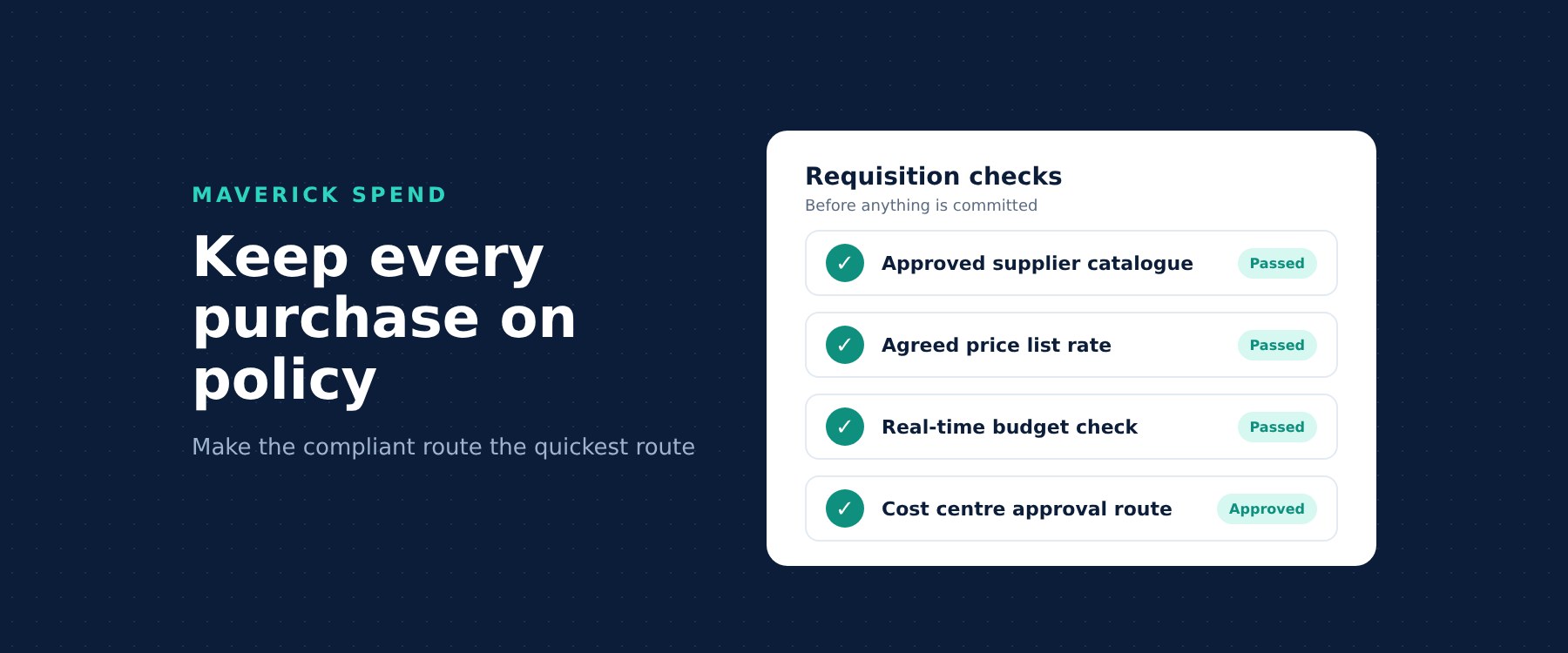
i2B supports supplier punchout catalogue connectivity and price lists, so requesters choose from approved suppliers at the rates you have agreed. That means fewer off-contract purchases and less time spent checking prices after the fact.
Automatic approval routes
Every requisition is routed by an approval matrix that can work by value, department, location or cost centre, so the right people approve each request automatically. Approvers can approve or decline in one click, which removes the delay that tempts people to skip the process. You can read more about this in our post on purchase requisition software.
Budget checks before anything is committed
i2B includes real-time budget checks on requisitions, so budget holders can see the impact of a purchase before the money is committed rather than discovering an overspend at month end.
Approved requisitions become orders automatically
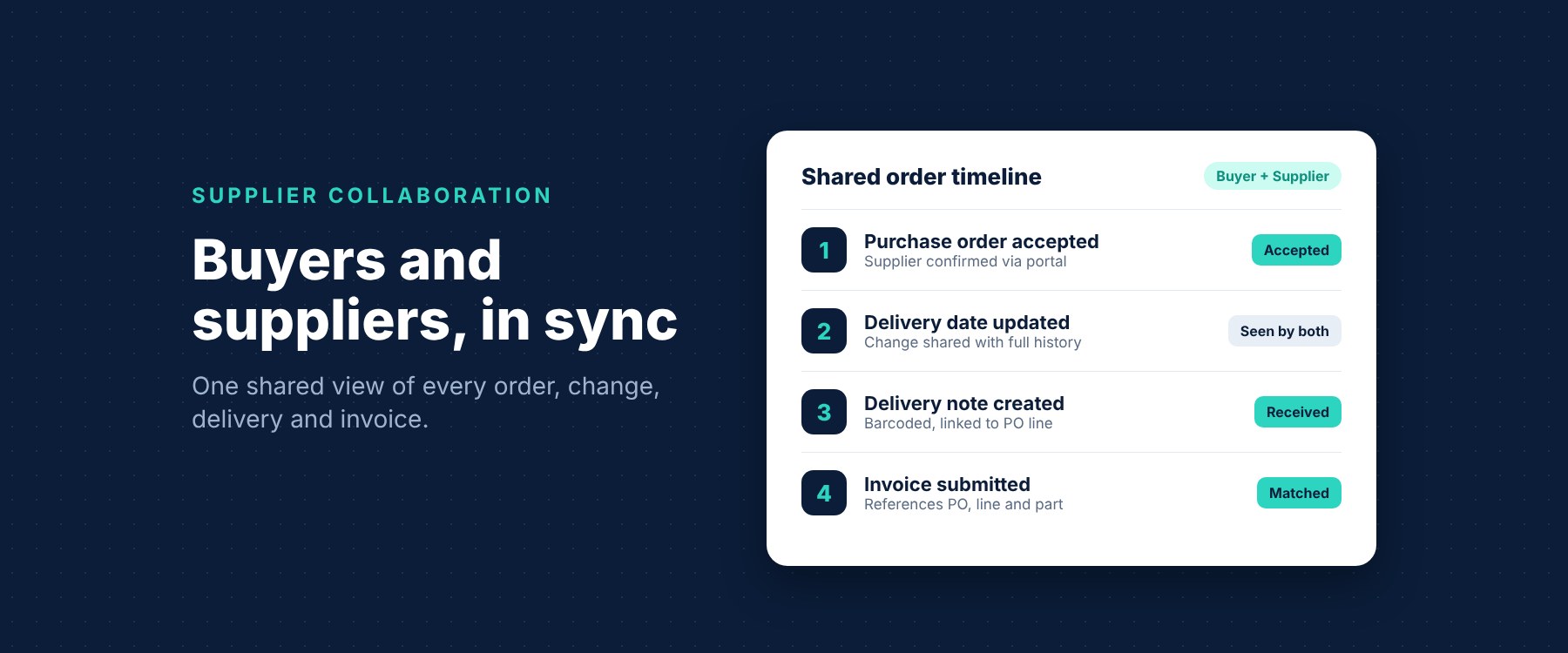
Once a requisition is fully approved, i2B creates the purchase order or RFQ in your ERP, with no chasing and no re-keying. Orders go to suppliers through the free i2B supplier portal, with automatic reminders until they are accepted and every change tracked.
Matching that closes the loop
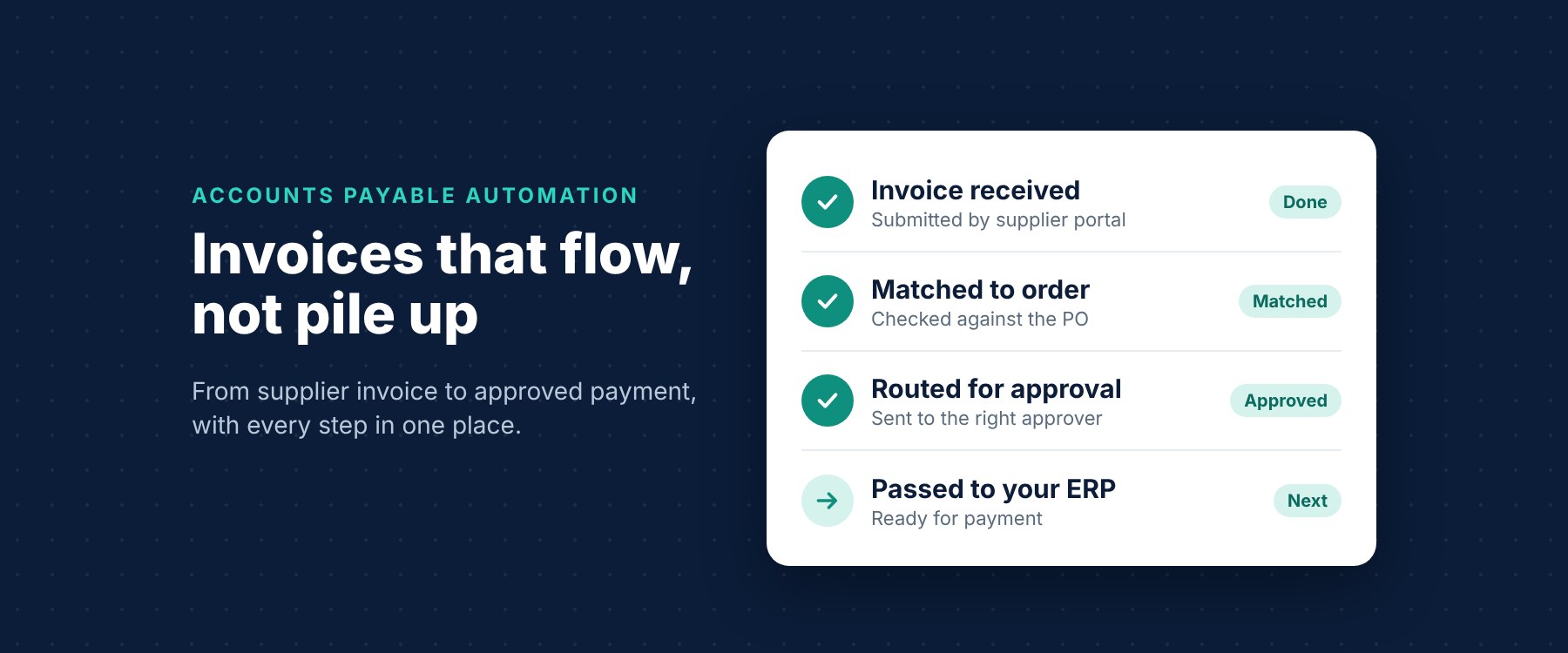
At the end of the cycle, i2B supports 2-way or 3-way matching. Goods must be receipted before an invoice can be raised, and invoices must reference the PO number, line and part number. An invoice with no approved order behind it is easy to spot, which discourages buying outside the process in the first place. Our post on accounts payable automation covers this in more detail.
Visibility and audit trails
Because purchases flow through one system, i2B gives you full audit trails and visibility of orders from the top level down to individual items. Combined with spend analytics, that makes it far easier to see where spend is going and where policy is being bypassed.
Practical steps to tackle maverick spend
Technology works best alongside a few simple habits:
- Make the approved route the quick route. Put your most frequently bought items into catalogues so requesters can find them in seconds.
- Set approval rules that match real risk. Route by value, department or cost centre so low-risk purchases move quickly and larger ones get the right scrutiny.
- Bring suppliers into the process. When suppliers receive and acknowledge orders through a portal, buying outside it becomes the exception.
- Review the data regularly. Use your reports to spot patterns of off-policy spend and address the cause, whether that is a missing catalogue item or a slow approval step.
Frequently asked questions
What is maverick spend?
Maverick spend is any purchase made outside an organisation's agreed buying process, such as using an unapproved supplier, paying more than the agreed price or ordering before approval.
Why is maverick spend a problem?
It weakens negotiated savings, makes budgets harder to forecast, leaves gaps in spend data and creates extra work in accounts payable when invoices arrive without an approved order.
How does i2B help reduce maverick spend?
i2B combines punchout catalogues and price lists at agreed rates, automatic approval routes, real-time budget checks and 2-way or 3-way matching, so the compliant route is also the quickest one.
Can i2B route approvals by department or cost centre?
Yes. The i2B approval matrix can route requisitions by value, department, location or cost centre, and approvers can approve or decline in one click.
Does i2B work with our existing ERP?
Yes. i2B connects with major ERP systems, and approved requisitions become purchase orders or RFQs in your ERP without re-keying.
Keep every purchase on policy with i2B
If maverick spend is costing your organisation money and visibility, we would be happy to show you how i2B can help. Get in touch with our team to arrange a conversation.
Know a company that could benefit from i2B? Through our referral programme, you can receive a $500 USD Amazon Gift Card when a company you refer becomes a new i2B client.